
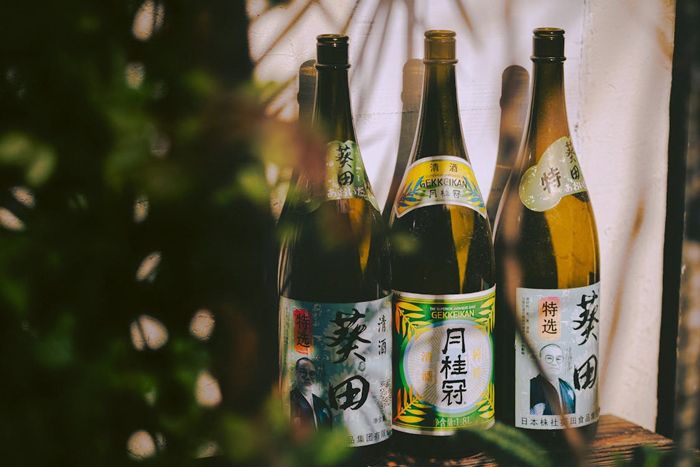
In Hong Kong, whether you’re at an izakaya, a Japanese restaurant, or a high-end omakase counter, when you open the sake menu, you’ll almost always see the “Daiginjo” category—and its price is often a notch above that of “Junmai.”
Many people naturally assume: Daiginjo = more premium = definitely better tasting.
But that idea isn’t entirely correct.
If you’ve ever found some daiginjo “too fragrant, too light, or even a bit cloying,” and instead preferred the fuller body of certain junmai, rest assured—there’s nothing wrong with your palate. Because in the world of sake, “grade” reflects the complexity of the brewing process, not a direct measure of “deliciousness.”
What’s the real difference between daiginjo and junmai?
Many mistakenly believe that “daiginjo” means high-class sake and “junmai” means ordinary sake. But in fact, sake’s grading system is largely built on two dimensions: “rice polishing ratio” and “added ingredients.”
◆ What is Daiginjo?
The rice polishing ratio (seimaibuai) is key to understanding sake—it’s the percentage of rice left after milling away the outer layers. Daiginjo requires a polishing ratio of 50% or below, meaning at least half the grain is milled away. This is because the outer layers contain proteins and oils that can produce off-flavors during fermentation. The more polished the rice, the cleaner the resulting sake.
It’s worth noting that daiginjo typically has a small amount of distilled alcohol added (legally permitted), which helps extract finer, more floral and fruity aromas. As a result, daiginjo is characterized by a gorgeous, expressive aroma and a delicate, light, elegant texture—think white flowers, cantaloupe, or pear.
◆ What is Junmai?
Junmai is a purer concept: it’s made only from rice, water, koji mold, and yeast—no added distilled alcohol—and its polishing ratio requirement is relatively lenient.
Without alcohol adjustment, junmai tends to have a richer rice flavor, fuller body, and more pronounced acidity and umami. It gives a solid, “like eating a mouthful of rice” sensation.
Why isn’t daiginjo necessarily “better tasting” than junmai?
Many consumers assume daiginjo is superior to junmai in taste, and that’s not entirely their fault. For a long time, the sake market has been priced by grade and numbers: the lower the polishing ratio and the higher the grade (daiginjo > ginjo > junmai > honjozo), the more expensive it is. Over time, people naturally form the intuition that “expensive = delicious.”
But here’s the issue: delicious is never an absolute value—it’s a subjective feeling. In other words, “premium sake” isn’t for everyone:
1. Aroma is a double-edged sword
Daiginjo pursues “ginjo aroma,” a fruitiness achieved through lab-level precision. Beginners may find the first sip stunning, but drinking daiginjo all night can lead to olfactory fatigue, even a cloying sensation. In contrast, junmai’s more restrained aroma is easier to drink for longer (what Japanese call nominikui).
2. Drinking context matters
Daiginjo is like fine art—best appreciated alone. But if you’re eating hot skewers, spicy hot pot, or boldly flavored braised snacks, daiginjo’s delicate flavors will be instantly overwhelmed and taste bland. That’s when junmai’s strong food-pairing ability shines: its umami pairs perfectly with fats and even cleanses the palate.
3. The magic of temperature
Sake’s most fascinating aspect is its temperature versatility. Daiginjo is typically only served chilled; heating it can ruin the aroma and bring out bitterness. But many junmai become mellow and smooth when warmed (kan). On a cold winter night, a warm cup of junmai is far more comforting than chilled daiginjo.
4. Personal taste preference decides everything
Daiginjo’s aroma and delicacy require some tasting experience to fully appreciate. First-time drinkers often think, “Hmm, it’s fragrant… but that’s it?” and find it somewhat hollow. Junmai, with its direct flavor and solid texture, is easier for beginners to recognize and feel—“This sake has presence”—helping them build a quicker appreciation for sake.
Moreover, taste preferences vary. If you like a clean, crisp, sharp texture, daiginjo may suit you better. If you prefer rich, bold, rice-umami impact, junmai is your true match.
Is the sake grade ranking really useful? A misunderstood hierarchy
We tend to view “tokutei meishō-shu” (special designation sake) as a pyramid, with daiginjo at the top and honjozo at the bottom. But this ranking reflects production cost, not deliciousness.
So, sake grades are more a reference for “brewing style” than a restriction on your preferences. After all, these factors often have a bigger influence on flavor:
1. Yeast: The soul of flavor
Even within daiginjo, using “Association Yeast No. 9” yields a fresh fruitiness, while “Association Yeast No. 18” produces an intensely rich peach aroma. Yeast decides whether a sake is elegant or exuberant.
2. Water: The backbone of sake
Soft water (e.g., Hiroshima, Kyoto) creates a mellow, slightly sweet sake. Hard water (e.g., Hyogo’s Nada district) produces a crisp, dry finish. That’s why some sakes feel like silk and others cut like a blade.
3. Brewing style: Sweet vs. dry
Sweet (amakuchi): higher residual sugar, great with desserts or on its own.
Dry (karakuchi): not spicy heat, but “not sweet and refreshing,” with a clean finish—ideal with sashimi.
4. Serving temperature
Daiginjo is best chilled (5–10°C); heating destroys its aroma and brings out bitterness. Junmai is far more flexible: chilled for refreshment, room temperature for roundness, and warm (40–50°C) unleashing a burst of rice umami—perfectly comforting in winter.
Choosing the right temperature is ten times more important than choosing the right grade.
Practical guide: How to find your sake soulmate
Instead of agonizing over “daiginjo vs. junmai,” ask yourself three questions:
Q1: Do I prefer light/clean or rich/robust?
– Light/clean → Daiginjo, ginjo, honjozo (best chilled)
– Rich/robust → Junmai, kimoto, yamahai, unfiltered nama genshu
Q2: What food am I pairing it with?
– Light dishes (sashimi, sushi, white fish) → Daiginjo
– Heavy dishes (grilled meat, skewers, hot pot, Chinese food) → Junmai
– Cheese, fried food, creamy dishes → Junmai or aged koshu
Q3: How will I drink it?
– Mostly chilled → Daiginjo, ginjo
– Room temperature or warm → Junmai, honjozo
A practical tip:
The first time you buy sake, don’t go straight for daiginjo. Buy a bottle of junmai in the HKD 100–200 range (e.g., an entry-level Aramasa, Taisake, or Sharaku) and a daiginjo around HKD 200–300 (e.g., Dassai 45, Kubota). Taste them side by side at home. You’ll immediately understand the difference yourself—not because someone told you.
Myth-busting Q&A: Bulletproof your sake knowledge
Q: Daiginjo contains added distilled alcohol. Does that mean it’s less pure and causes hangovers?
A: This is the biggest misconception! The alcohol in daiginjo isn’t added to cut costs—it’s to “draw out aroma” and make the finish drier. High-quality brewing alcohol is pure grain distillate. A proper amount actually stabilizes the sake. As for hangovers, they usually come from drinking too much or mixing drinks—not from added alcohol.
Q: Does sake get better with age like wine?
A: Most sake (especially daiginjo) is best enjoyed fresh. The golden drinking window is within one year of bottling. Unless it’s specifically labeled as “koshu” (aged sake), treat it like fresh milk—drink it sooner rather than later.
Q: Does sake always have to be chilled?
A: Daiginjo is best chilled (5–10°C). But many junmai can surprise you when served at room temperature or even warmed to 45°C.
The true beauty of sake has never been in numbers or labels. It lies in the countless transformations it undergoes with different temperatures, dishes, and moods. Some people spend their lives pursuing the transparency of extreme rice polishing, while others forever cherish the honest depth of junmai. Neither is wrong.
The person who truly understands sake isn’t the one who only drinks the most expensive bottle—but the one who knows which bottle to open and when.
